Skip to content

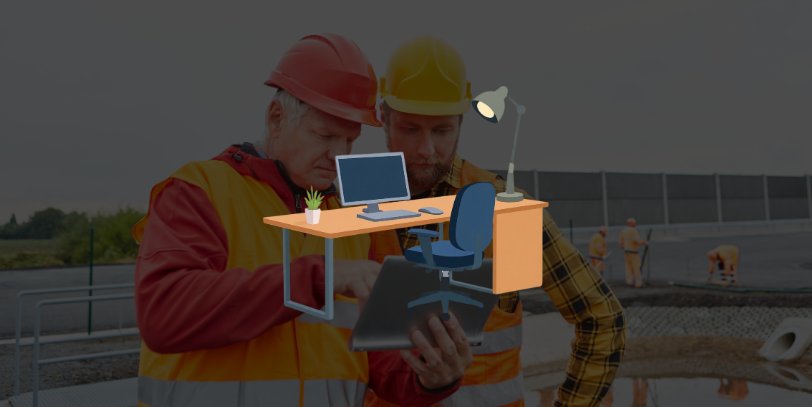
Most subcontractor owners spend their Fridays doing the same thing: chasing timecards.
The crew has been out all week. The foreman has the hours written down somewhere. The office is waiting on them so payroll can go out Monday. And no one in the office actually knows what happened on site this week until someone makes a phone call.
That gap between what the field knows and what the office knows is the most expensive problem most subcontractors are not tracking.
What the field-office gap actually costs
Late information causes real financial problems, and they add up faster than most owners realize.
When timecards come in Friday, payroll has to go out Monday. If the hours are wrong, you are either overpaying or sending corrections that delay your crew getting paid. Neither is good.
Billing gets pushed because the office is waiting on job reports that have not come in yet. You did the work. You just do not have the documentation to prove it, and invoices do not go out without it.
Job costing is almost always backwards. By the time the office has enough data to know a job went over budget, the job is done. There is nothing left to adjust.
And if something goes wrong on site, you are piecing the story together from memory and a paper daily report that may have been filled out days later.
Why the gap exists
The field and the office run on different systems.
Field workers record time by hand, on paper, sometimes from memory at the end of a long day. The foreman collects those sheets. Someone drives them to the office, or calls in the numbers, or takes a photo. The office re-enters them into payroll or a spreadsheet. Everyone is working from the same data, just four days later and after at least two rounds of manual handling.
There is no shared system of record. So information moves slowly, manually, and imperfectly every single week.
What closing the gap requires
Real-time data from the field has to land in the office without anyone having to relay it.
That means field workers clock in and out from their phones, tied to the specific job they are on. It means the foreman submits the daily report from the job site, not from a truck in the parking lot Friday afternoon. It means the office sees today’s hours before the crew drives home.
The data has to move automatically. If it requires a manual step, it will not happen consistently. And mostly consistent payroll data is not useful payroll data.
What it looks like when it works
Southern Utility Group put it simply: “Crew Tracks has become the foundation to how we run our company. From tracking crew production, managing profit margins, quality control, all the way to improving our billing cycle. Crew Tracks is the key to guiding our success.”
That is what closing the gap actually feels like. Not a better spreadsheet. A shared system both sides use at the same time, looking at the same data.
The office does not have to chase the field. The foreman does not have to bring anything in. Payroll runs off the data that came from the field that week. Billing gets backed up by documentation that was created when the work happened, not reconstructed afterward.
How CrewTracks closes the gap
CrewTracks gives field workers a mobile app to clock in and out, log production, and submit daily reports from the job site. Everything is tied to the job and the date automatically.
The office sees it as it comes in. When a crew clocks in using GPS time tracking, it shows up. When the foreman submits a daily report before heading home, the office has it before end of day.
Production tracking goes one step further. It connects hours to what actually got done. So the office is not just seeing who worked, they are seeing output against the bid. That is what real job costing looks like: hours tied to results, not hours in isolation.
There is also document management built in, so safety forms, change orders, and site documentation live in the same place as the time and production data. Nothing gets lost in a binder.
If you want to see how the field-to-office sync works, talk to our team. We will show you what it looks like for a crew your size.